We held the third session of our webinar series on “Disability Activism Under Pressure: Resistance and Resilience in Authoritarian Contexts” on September 18. This session, titled Funding Futures: Re-Thinking Current Models and Finding Alternatives, brought together Deya Bhattacharya (AWID), Marija Jakovljević (Dalan Fund), and Fredrick Ouko (ADD International). The conversation, moderated by Lizzie Kiama (This Ability), addressed an issue on the forefront of many of our minds—resourcing and funding our movements.
As always, we are deeply grateful to our speakers and moderator for their time and generosity, and to everyone who joined us live. For those who missed it — or who want to revisit the discussion — the full recording is available with this link. You can also find our reflections and summaries of the first two sessions on our website.
Key Takeaways
Funding is a big topic with many facets
Resourcing is central to our work, yet it is increasingly under threat. Restrictions on foreign funding are growing, funding cuts are hitting hard, and many groups face increased scrutiny over their resources. Well-established critiques of funding practices also came up in the session – bureaucratic processes, inaccessible and overly technical language in application forms, project-based funding, narrow and rigid thematic areas, and ableism and lack of inclusivity in the funding ecosystem.
The conversation was wide-ranging and covered many issues: the flow of power and capital; the lack of meaningful participation in grant-making; the importance of funding movements rather than projects (and even who decides what constitutes a movement); resources beyond money; and tools used by authoritarian states to criminalise funding.
Such was the scope of the conversation that we ran out of time to discuss alternative means of funding our movements. Our speakers have very generously sent us some resources which you can find towards the end of this piece.
“Funding challenges are not only about scarcity. The way resources are channelled, whether through large international NGOs, state agencies, or private donors can shape agendas, they can limit autonomy, or create dependencies.”
lizzie kiama
Money is never neutral
The inextricable links between flows of capital and flows of power were a critical point raised in different ways by all of our speakers. As Deya put it, “Who controls the flows of resources and who is silenced when those flows are cut?” For them and AWID, a key concern is how funding cuts affect the most marginalised people, including gender non-conforming people, disability justice folks, sex workers, and those working on harm reduction. For Fredrick, the question of who can claim expertise and the need to have disabled people making funding decisions has guided the transformation of ADD International towards participatory grant-making.
Context matters
Funders are often distant and distanced from grassroots activism. This is a longstanding critique, and it was not surprising to hear this theme in the session. Our speakers went further and described their efforts to address this problem. Fredrick stressed the importance of grantmakers being located in the region and countries they are funding. Marija spoke about how the Dalan Fund understands movements within the context of repression.
“It’s always in the context because context shapes how movement is defined. In some countries and territories, it is dangerous that you name yourself in a certain way [as a movement]. Philanthropy does not always have this capacity to grasp all the nuances.“
Marija Jakovljević
Rights and resources in authoritarian times
There are many examples of the ways authoritarian states weaponise finances and directly impact the funding landscape—foreign agent laws, criminalising remittances, restrictions on foreign funding, and other regulatory frameworks. Equally important are the indirect effects of hostile political climates—funders withdraw entirely from countries or only operate with strings, further reducing the ability of activists to challenge authoritarianism.
In common with the first two sessions, speakers at this session also pointed out that some groups, including persons with disabilities, are more significantly targeted. Disabled activists are often the first to lose resources when donors pull out, and authoritarian regimes may portray disability as a burden or instrumentalise it for propaganda while suppressing independent organising.
“But sometimes the pressure doesn’t just come from states, right? Many international funders, regional funders are fearful of risk. They either entirely withdraw from countries that are in authoritarian contexts or really super difficult conditions. Too often, the streams that funders use echo the very logic of authoritarianism itself, control, surveillance, restriction, and kind of a slow atrophy of autonomy.”
Deya Bhattacharya
The challenges are multi-faceted, so must be our approach
There is no doubt that times are hard. Despite this, our speakers, from their various perspectives, pointed to ways to navigate through this mess. Marija astutely pointed out that authoritarian regimes are constantly learning from each other. She stressed the importance of activists to do the same—learn from each other and share knowledge and resources. From the perspective of feminist organising, Deya pointed out a need to re-think what we consider resources. They pointed to the necessity of nurturing the “invisible infrastructures” that sustain us—care webs, social aid, and resource sharing. Fredrick stressed the importance of ensuring that we continue to support disability justice initiatives and be inclusive in funding practices.
“Intersectionality. People think that disabled people exist in their own cocoon somewhere. Gender, race, poverty, there’s a lot of issues. There is a way that disability interacts with climate change so if there is funding for climate, why are we not including disabled people? If there is funding for sexual rights, why is disability not included?”
fredrick ouko
Learn from the past to prepare for the future
This is not the first or the only time activists have faced authoritarianism, we have done so before and we must go back to some of those lessons. One key reflection post-webinar was how little is remembered about how radical movements of the past—such as the Black Panthers or anti-apartheid organising in South Africa—were resourced and sustained. Marija also stressed the need to be proactive not only in our efforts to challenge authoritarianism but also in anticipating and adapting to the shifts in the funding landscape.
Exploring alternatives
Unfortunately, we did not have the time to get into this critical issue in depth. Our speakers mentioned community-based giving, mutual aid initiatives, cooperatives, social enterprises, income generation, and other forms of “autonomous resourcing”. We can learn a lot about sustaining movements without reliance on external donors from marginalised activists who have been always neglected by the funding ecosystem.
We hope to continue this conversation in the future. For now, you can explore some of the resources our speakers shared with us: Our Resource, AWID’s Feminist Funding Resources, Growing Against All Odds – Dalan Fund, and Rights At Risk – AWID.
The system can feel surreal
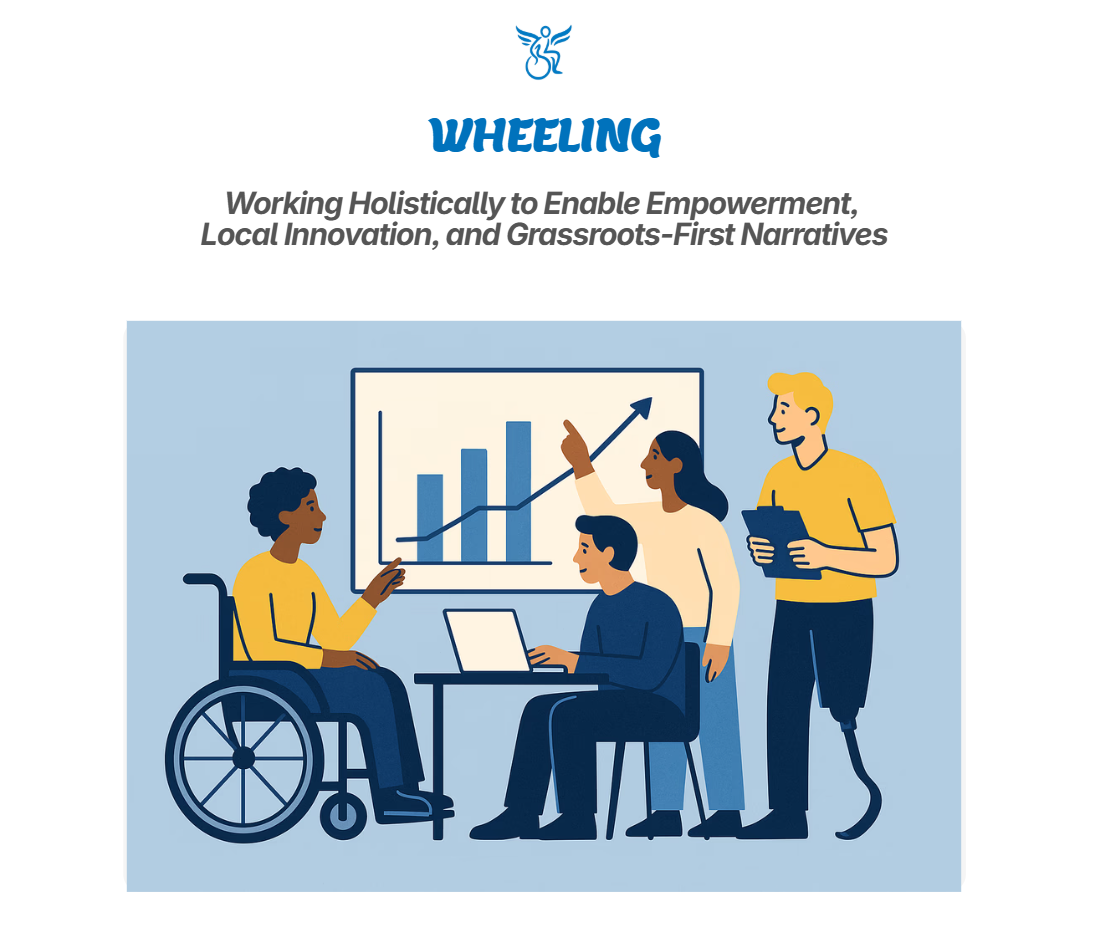
Before this session, we attempted to create a tongue-in-cheek game, intended to poke a little harmless fun at the ridiculousness of the current system of funding. However, we clearly under-estimated just how ridiculous the system can sometimes be. Much to our horror, some of the people who opened the game thought it was a real funding opportunity. As seems to be the case in politics these days, the line between reality and satire just keeps getting thinner. We invite you to have a light-hearted moment in these tough times and apply for the WHEELING fund. Click Apply Now and see the game through.
What’s Next
Our next session, Re-thinking how we come together: building diverse structures of organising, will take place on 1 October at 5 PM CEST. We hope you will join us to explore the risks formalised organisations face in authoritarian states and alternate ways of organising such as informal collectives, coalitions, and alliances. If you have not registered yet, you can register now.

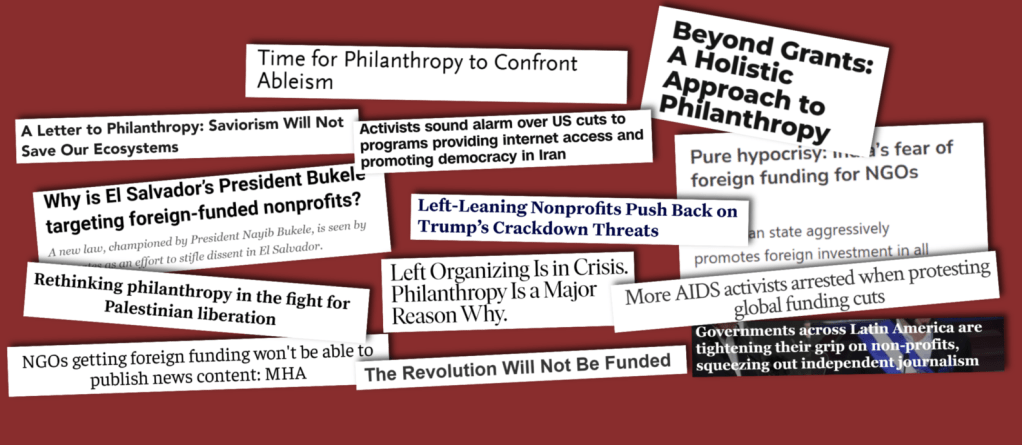
Featured image: Collage of news headlines about the funding ecosystem.
 Mad Thinking