Mad Thinking hosted the fifth session of its 6-part webinar series, “Disability Activism Under Pressure: Resistance and Resilience in Authoritarian Contexts” on October 15. Titled “Solidarity in the Face of Authoritarianism: What Cross-Movement Activism Demands”, the conversation explored the meaning and practice of solidarity across movements.
The session was moderated by Negin Shiraghaei (Azadi Network). Our speakers, Nakijoba Joyce (Diverse Empowerment Foundation), Shaharzad Akbar (Rawadari), and Luciana Viegas (Vidas Negras com Deficiência Importam), shared insights from their diverse experiences of working and building solidarity across movements.
We are grateful to our speakers for generously sharing their time and knowledge, and are thankful to everyone who joined us live from different parts of the world. You can watch the full recording via this link and revisit reflections from earlier sessions on our website.
Below are a few threads that stood out to us — a handful of reflections to carry forward as we continue thinking about what solidarity means and looks like.
Key Takeaways
Solidarity requires an analysis of power
Marginalisation does not happen in a vacuum. Understanding who is excluded from our space and how is foundational to the practice of solidarity. Our speakers reminded us that this requires a commitment to examine how power and privilege operate across time and space. Luciana described how colonial histories in Brazil still shape the exclusion of Black communities, cultures, peoples, and languages from disability activism. Shaharzad reflected on how inequality in Afghanistan has been shaped by decades of injustice, war, and violence. As is the case for many contexts, speaking English, freedom to travel, and access to global power centres, are critical factors in shaping who leads and who is left behind in our movements.
“Our work is not only about inclusion. It’s about transforming who gets to speak, who gets to lead, and whose histories are seen as central…So our strategy is to start with marginalized communities. We go to where the pain is.”
luciana viegas
Solidarity is cognizant of differences
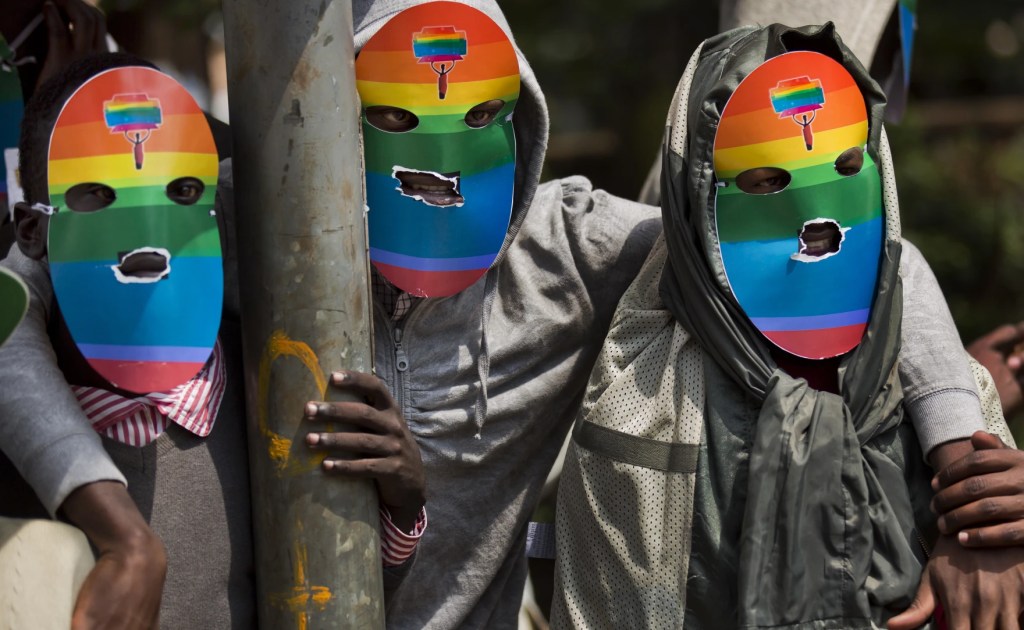
Solidarity starts with an acknowledgement of the differences in privilege and risks between communities. It is a commitment to work in ways which protect those who are most at risk from authoritarian governments. Joyce stressed the need to re-imagine leadership in very repressive environments. For instance, LGBTQ+ people in Uganda are criminalised, and as such, visibility for queer people can be life-threatening. In such situations, different people can take on different roles—those outside the country can perform more visible advocacy roles and those inside can focus on underground organising. It is however critical to recognise both forms of work as powerful and that “leadership can happen behind closed doors, in encrypted chats or in networks of trust”.
Solidarity is adaptive
Solidarity entails searching for new alliances—sometimes in unlikely places—and trying different methods of working together. Shaharzad described reaching out to Muslim women scholars in Indonesia and grassroots movements in South Africa and Spain to participate in the People’s Tribunal for Women of Afghanistan. This stemmed from a need to go beyond Western partners and recognise that “solidarity in our region matters too.”
Negin helpfully reminded us that while many of the challenges we face in our varied contexts are similar, there is “no one way that fits all or one solution we can all apply.” Adapting our methods and means of action and trying new strategies is an act of humility and a refusal to accept failure and fragmentation.
“One way for us to try to keep the issue in the spotlight is to constantly explore new avenues, knock new doors. You know, we knocked this, okay, maybe it wasn’t as impactful. Don’t get discouraged. Find another door to knock. You published a report that got only this far, how can you amplify it? Find someone to sing about it or do something else. And that’s what we have been trying. And that’s what has been working to some extent.”
Shaharzad Akbar
Solidarity is not without tension
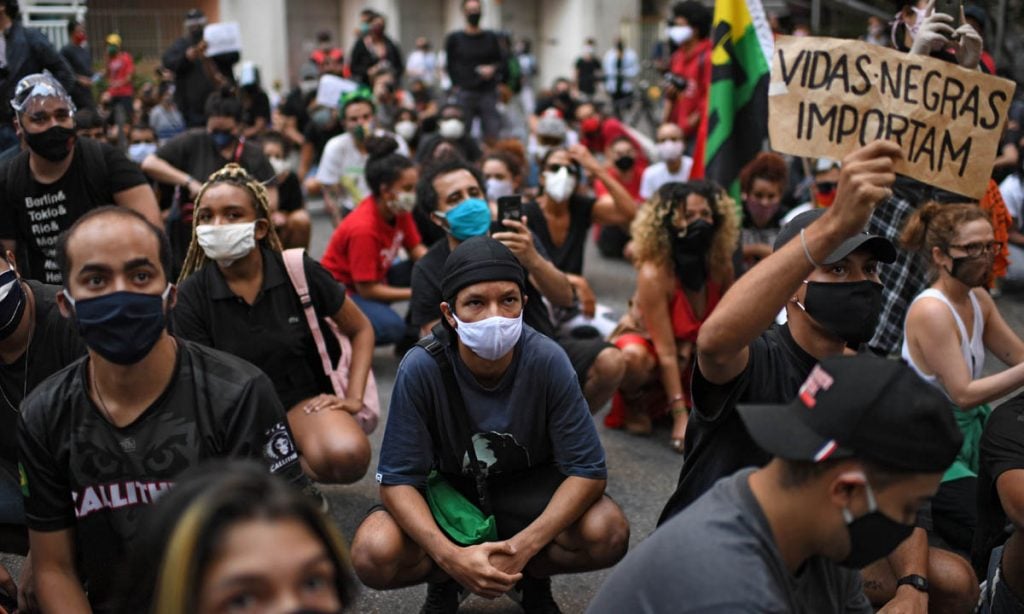
We live in times of multiple urgent crises. Solidarity in this context is hard work. It requires difficult political decisions about where to focus, how to share resources, and which alliances to prioritise. For Shaharzad, Afghanistan’s long history of injustice and impunity has created many perpetrators and survivors of violence and made it complex to build a common shared space. For Luciana, tension exists within movements themselves. She described the challenges of working with a disability movement in Brazil that is “mostly white, middle-class, and not ready to see Black people with disabilities in leadership” and other movements which are often not accessible. Solidarity in these contexts means naming these tensions, trying to navigate them with care, and staying with the discomfort when they cannot be resolved.
Solidarity is not a performance
While statements of solidarity can be helpful in drawing attention to an issue, for our speakers, the work of solidarity goes beyond visible symbolic gestures. Joyce talked about the importance of offering meaningful support which is not externally visible, but is nevertheless deeply felt by marginalised communities. She stressed the importance of building infrastructures of care which facilitate resource sharing, protection, and trust. Shaharzad echoed this insight by drawing attention to Afghan men who worked behind the scenes to make the tribunal possible and listened to the painful testimonies of women survivors. Witnessing and listening to those at the receiving end of injustice and working quietly to support the movements which dismantle structures of oppression are all acts of solidarity.
“What matters is not who is seen but who is safe and supported to continue the work. In the end, solidarity is not performance. It is protection, trust and collective care. Even when we cannot stand side by side in public, we can still move together in purpose and in truth.”
Nakijoba Joyce
Solidarity is continual process
Solidarity is not a single act—it is a practice built from multiple tiny, consistent moments. Resistance and solidarity are acts of preserving hope, building care, and continually committing to stand with those under threat. Luciana warns us against a practice of solidarity which replicates hierarchies between those who need it and those who give it. Rather, she stresses the importance of building collective and community care as a key part of resistance against colonial and ableist systems. For her, and for our other speakers, solidarity is about care.
“We break isolation, we need to unlearn hierarchy. Solidarity is not built from the top down, but it’s building-in community and care in everyday acts of saving and resistance. We say, we see you, you matter, and we rise together.”
luciana viegas
What’s Next
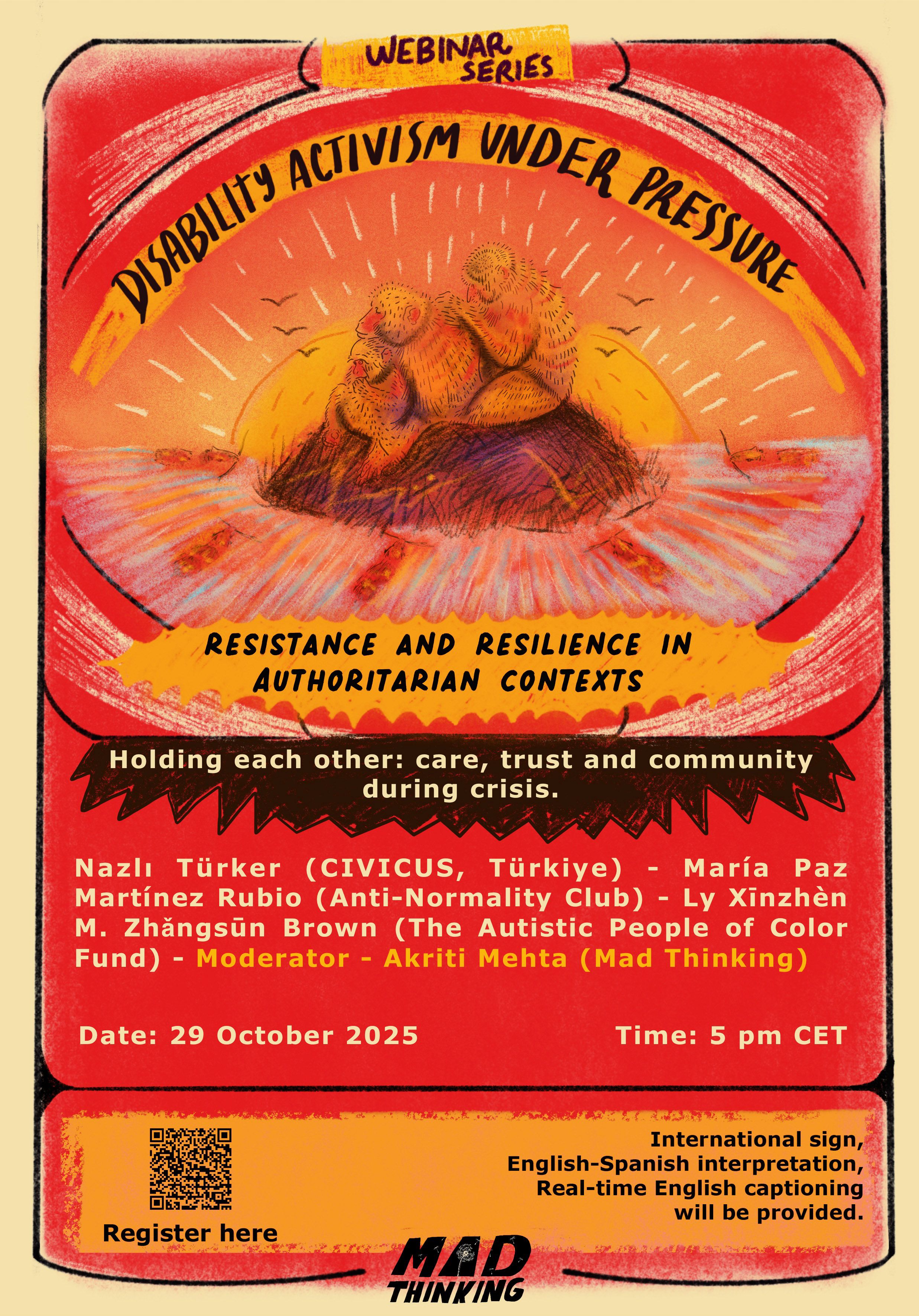
Our final session of this series, “Holding Each Other: Care, Trust, and Community During Crisis”, will take place on 29 October at 5 PM CET. The session will highlight practices of care and community building as a way to survive and resist authoritarianism. The session will also reflect on the key points raised in this series over the last 12 weeks.
If you have not registered yet, you can register now.
Featured image: Protestors in masks gather to stand against Uganda’s criminalisation of LGBTQ+ communities. At Uganda High Commission in Nairobi, Kenya. Photo credit: Ben Curtis/AP.
 Mad Thinking