In the final session of our series “Disability Activism Under Pressure: Resistance and Resilience in Authoritarian Contexts“, we turned inwards. After weeks of examining repression, surveillance, and the machinery of control, we closed by asking how we hold one another when everything else collapses. Care, trust, and community are often invoked as buzzwords, but in movements under authoritarianism, they are hard, deliberate practices.
Together with Nazlı Türker (CIVICUS), María Paz Martínez Rubio (Anti-Normality Club) and Ly Xinzhèn M. Zhāngsūn Brown (The Autistic People of Color Fund), we explored what collective care looks like amid exhaustion and fear: how we keep choosing each other, how we build safety without silence, and how care remains a form of resistance.
We thank Nazlı, Paz, and Ly Xinzhèn for the honesty and care they brought to this conversation, and everyone who joined us from across the world. You can watch the full recording at this link and revisit reflections from earlier sessions on our website.
Below are a few threads that stayed with us, reflections on what it means to hold each other in times of crisis.
Key Takeaways
People are feeling the hit — and naming it matters
Across contexts, fear and exhaustion have become part of everyday organising. Nazlı spoke of how repression fractures trust and relationships and pushes movements into survival mode, while Paz and Ly Xinzhèn described the weight of burnout, grief, and despair. Naming these realities, instead of hiding them behind productivity or strength, becomes a first act of collective care.
Burnout is collective, not individual
Ly Xinzhèn reminded us that exhaustion is structural, not individual. What we often call burnout is the predictable result of trying to survive and care for others within systems built to exhaust us. When entire communities are forced to act as one another’s crisis teams, sustaining solidarity and care demands creativity, shared responsibility, and the courage to accept that we cannot do it all. They also reminded us that access and privilege shape how we show up, and solidarity begins with recognising and redistributing those uneven resources.
“Everybody I know is burned out… Where do we bridge our commitment to collective care and solidarity with the reality that, in the absence of sustained structural and external support, if it’s twenty people who are all burned out trying to care for each other, we can’t, actually. We’ll try, and we’ll struggle through it, but we can’t. It’s not sustainable for us to be one person or a small group, whole crisis response centres and care teams, which is the experience that so many of us have—especially in hyper-marginalised disabled spaces. We are whole care teams and crisis response teams for entire communities. And we are all in crisis ourselves.”
Ly Xinzhèn M. Zhāngsūn Brown
Care is political, not a secondary task
Ly Xinzhèn noted that care is not a soft or secondary task but a radical act of resistance against systems built to exhaust and isolate us. Nazlı added that care-oriented funding and organisational practices are strategic investments in resilience rather than “nice-to-haves,” and spoke of storytelling as a way to rehumanise our struggles and rebuild trust amid repression. Paz highlighted the need for spaces like the Anti-Normality Club, where people can be “the most authentic version” of themselves and rebuild connection through honesty, affection, and shared vulnerability. Akriti reminded us that collective care has deep roots in queer, feminist, disability, and Indigenous traditions that have always framed care as resistance.
“We really need donors to understand that trust-based, care-oriented approaches are not just soft, nice-to-have practices. They are a strategic investment in resilience and, in the end, in impact, if it’s the thing we really seek.”
Nazlı Türker
Hibernation can be an act of care
Paz offered a quiet provocation: sometimes the most radical decision is to pause. Placing a collective “in hibernation” resists the capitalist demand for constant activity and honours the limits of those who keep the space alive. Rest, in this sense, is not withdrawal but a way of preserving what matters so that it can grow again.
Resilience is not toughness, but connection
Nazlı challenged the idea of resilience as endurance, describing it instead as being about “connection and authenticity.” She spoke of resilience as “choosing each other again and again,” across borders, identities, and generations. She reminded us that joy, playfulness, and intimacy are not distractions from struggle but strategies for survival. In times of repression, staying connected and finding joy become ways of saying: we are still here.
Mad and neurodivergent practices expand what care can mean
Paz shared how Mad and neurodivergent communities generate “undisciplined” practices of care — flexible, interdependent, and creative. These practices might involve peer support, nature, animals, or imagination, blurring the line between the caregiver and the person who needs care. They affirm lived experience as a source of knowledge and resist the medicalisation of our lives, showing that care is not something to be prescribed or perfected but continually reimagined together.
“Medicalization is everywhere these days. It’s in education, justice, housing, and not exclusively from pure psychiatric institutions but also in everyday lives and with everyday people.”
María Paz Martínez Rubio
Hope is a discipline
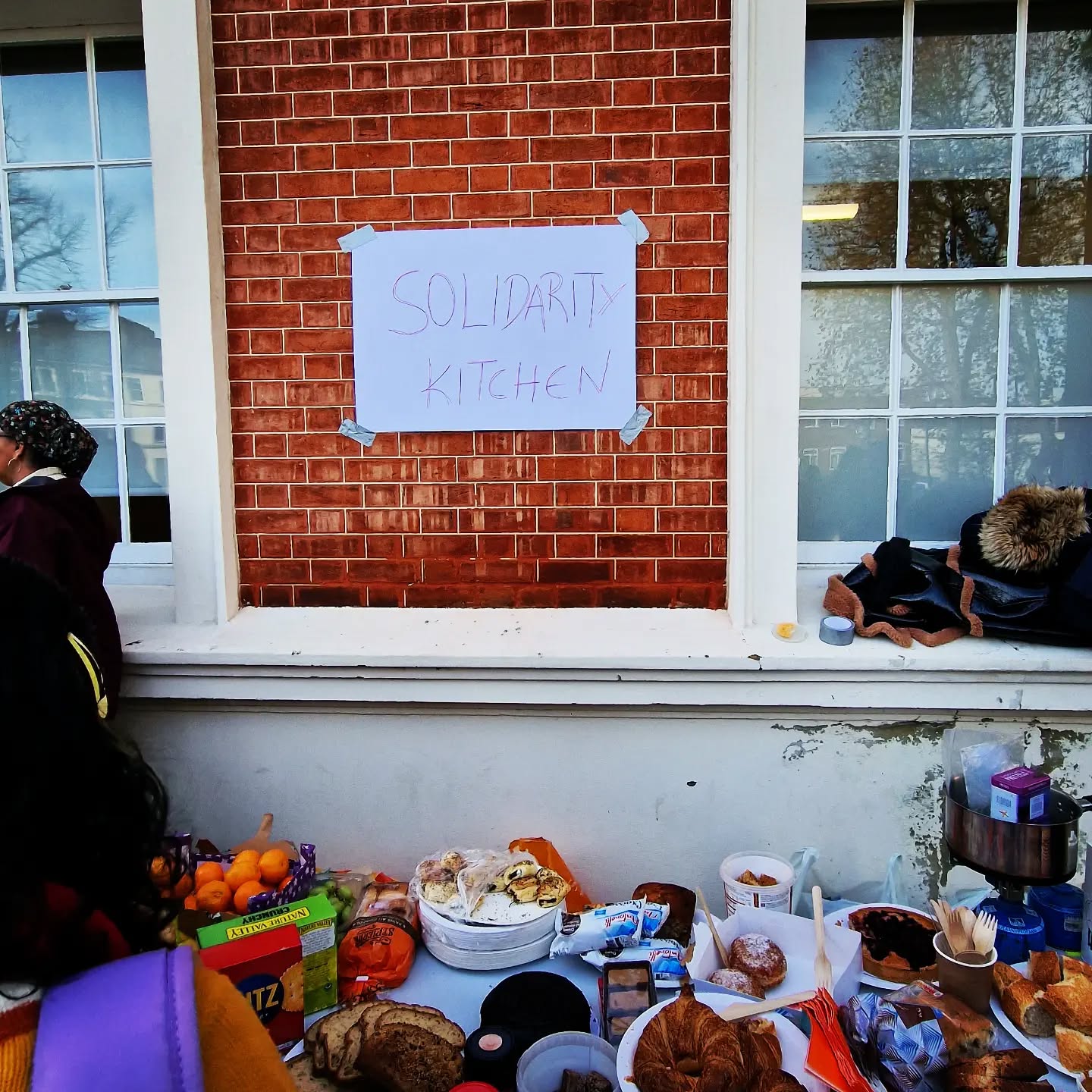
Echoing Mariame Kaba, Ly Xinzhèn described hope as a discipline — not optimism, but radical practice. It lives in small, everyday acts that defy erasure: cooking for a neighbour, checking in, sharing a meme that says “we’re still here.” They reminded us that hope is not abstract but lived — found in acts of care and survival that will never make the news but keep our movements alive.
Looking Ahead
With this session, our webinar series Disability Activism Under Pressure comes to an end. For now, we’ll pause — to rest, reflect, and hopefully return with new conversations. In the meantime, we invite you to read Akriti’s piece, “Doing Hope in the Ruins”, which explores how to hold on to hope and utopia in difficult times.
When we first proposed this series, some warned us that topics like authoritarianism, surveillance, and repression might not interest the “disability community”, more accustomed to other kinds of discussions. The more than 500 people who registered — and the remarkable participation across all six sessions — showed the opposite. There are indeed people working at the frontlines, navigating intersectional struggles, building spaces of care, and refusing to fit a single story.
If these conversations have shown anything, it’s that our movements are alive in many forms. And that even in hard times, we keep finding one another.
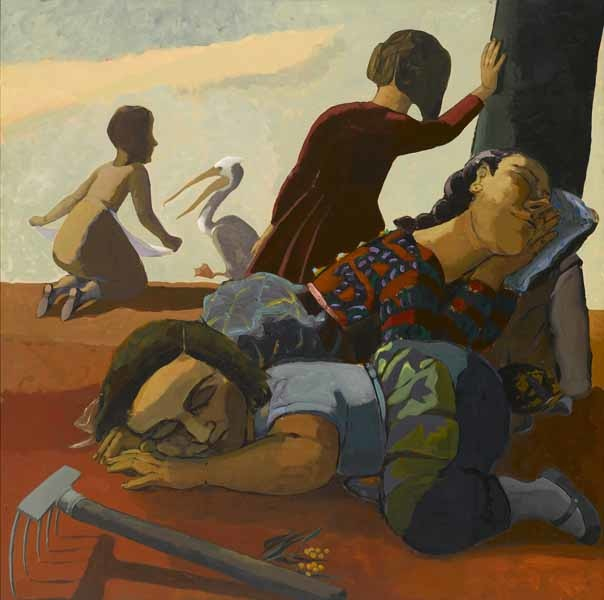
Featured image: Painting titled ‘Sleeping’ by Paula Rego. The Arts Council Collection.
 Mad Thinking