On August 20, we held the opening session of our series, “Disability Activism Under Pressure: Resistance and Resilience in Authoritarian Contexts.” The conversation, The Authoritarian Blueprint in Action, brought together Celeste Fernández (ACIJ, Argentina), Noah Bullock (Cristosal, El Salvador), and Shezana Hafiz (CAGE International, UK) to share experiences of how states target activism and what it means to keep organising under shrinking civic space.
We are deeply grateful to our speakers and to everyone who joined us live. For those who missed it — or who want to revisit the discussion — the full recording is available with this link (Passcode: eYJ$S36@).
We’re calling this series of follow-up notes La Yapa. Derived from Quechua, yapa means “a little something extra” in Peru and other countries — the extra herbs a vendor slips into your bag at the market, or the extra serving you get when you buy a jugo or a hot drink from a street vendor. A simple gesture of generosity. With La Yapa we want to offer that small extra after each webinar: not a full report, but a handful of reflections and threads that stayed with us, and that might spark further thinking and connection.
Key Takeaways
Not old-style authoritarianisms
The contexts we heard about — Argentina, El Salvador, and the UK — are not “classical” authoritarianisms. All three governments came to power through elections, but each has developed authoritarian traits: weakening institutions, criminalising dissent, and centralising power. In El Salvador, this is visible through mass detentions and institutional capture; in the UK, through the securitisation and criminalisation of Muslim and Palestinian activism; and in Argentina, through presidential abuse of power, erosion of rights, and hostility towards civil society.
Different places, similar toolkit
The contexts look very different, but the tools of repression are strikingly familiar. In El Salvador, authoritarianism shows through mass detentions, torture, and the capture of courts. In the UK, securitisation policies like Prevent have normalised surveillance and criminalisation, especially of Muslim and Palestinian activism. In Argentina, austerity and decrees are used to dismantle institutions and protections and silence civil society. Across these contexts, the underlying playbook repeats itself: surveillance, intimidation, criminalisation, and financial control.
“When a regime decides to violate the rights of one group of people, they’ve already decided that they can violate the rights of all society. And it’s really self-defeating, the belief that you can make those exceptions and still be safe and still have freedoms.”
Noah Bullock
The economic dimension
Authoritarianism does not rely only on police and prisons; it also works through budgets and markets. Austerity, funding cuts, and the weaponisation of finance are central tools of control. In Argentina, neoliberal adjustments and rollbacks of disability protections have deepened inequality. In the UK, austerity and counter-terror funding schemes have shaped who can access resources and who is excluded. In El Salvador, emergency powers have gone hand in hand with the erosion of social spending. Manufactured scarcity allows governments to reward loyalty, punish dissent, and scapegoat marginalised communities.
“You’ve got governments that will sort of manufacture this scarcity through austerity and cuts, and then they use that precarity to award loyalty and punish dissent.”
shezana hafiz
People with disabilities are hit harder
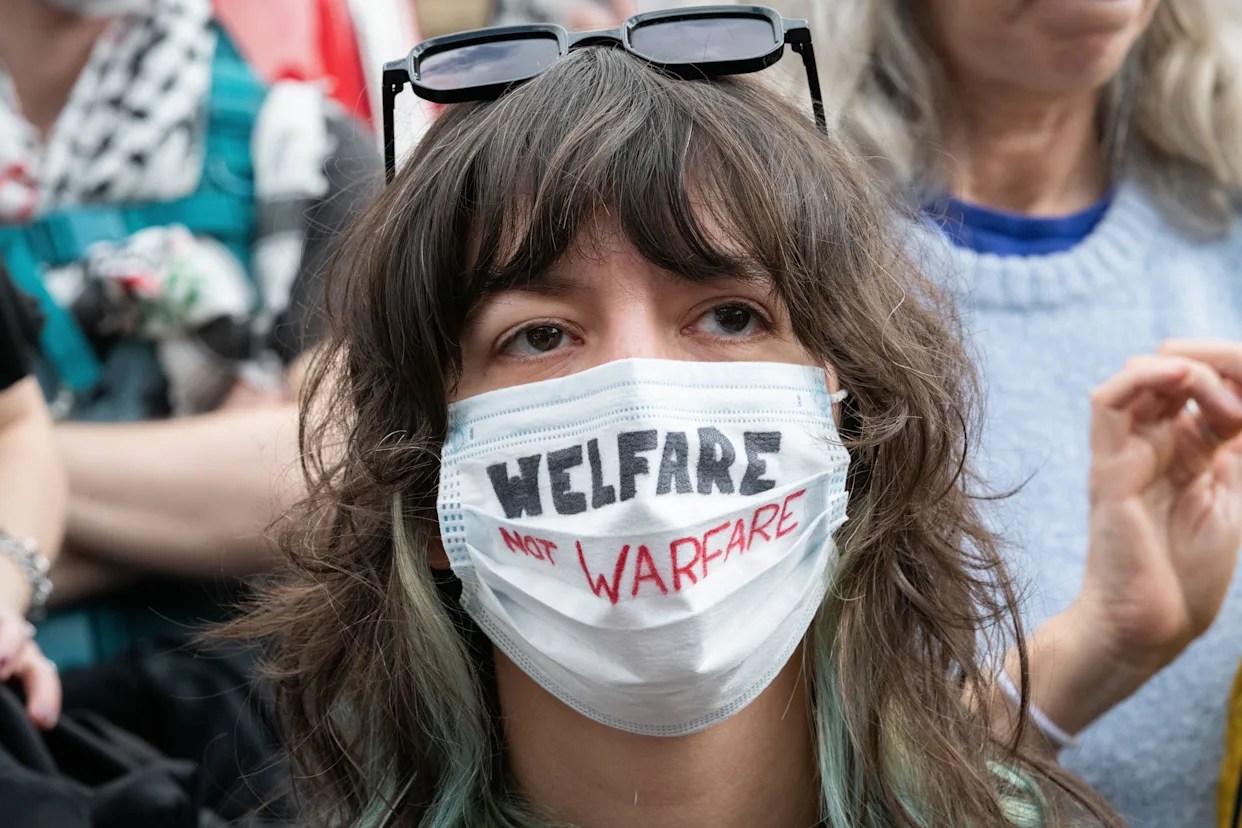
Far from being exempt, disabled people often bear the brunt of authoritarian policies. Whether through arbitrary detention, austerity measures, or exclusion from public narratives, authoritarianism further marginalises those already marginalised in society. In El Salvador, people with disabilities have been swept up in mass arrests, denied basic support in prison, and placed at high risk of torture when unable to follow orders. In Argentina, austerity measures — including the recent veto of measures to improve disability benefits — have pushed services to the brink, leaving people without essential supports. Authoritarianism not only marginalises disabled people; it also creates new disability through violence, neglect, and dismantling of protections.
Fascist aesthetics
A striking theme raised by Noah and echoed in the chat was the role of aesthetics in authoritarian politics. In El Salvador, propaganda promotes an ideal of the “good citizen” that erases disability altogether — equating worth with conformity, strength, and beauty. This points to the deeper connection between fascist aesthetics, ableist values, and eugenic visions of society. Authoritarian regimes do not just restrict rights; they attempt to shape who is seen as valuable, visible, or even human.
“We always said that what’s been done to the Muslims since 2001 is a laboratory of authoritarianism really, and it’s now expanding to wider society.”
shezana hafiz
Adapting resistance
Resistance is often borne out of necessity, but it is most effective when it is adaptive, unsettles the normalisation of authoritarian violence, and uses multiple tools. Shezana emphasised the need to dismantle the entire “architecture of authoritarianism” by challenging the tools and systems which enable it to flourish. For Noah and Cristosal, effective resistance included making the difficult decision to relocate and adapt their activism in the face of escalating threats. In Argentina, Celeste mentioned the use of multiple tools to challenge authoritarianism — leveraging international influence, engaging public opinion, and using legal machinery. All three of our speakers highlighted the need to continually think about the impact of activist strategies and change them as necessary.
“The traditional strategies that we were using, they are not as effective as before… And it forces us to rethink and to reconnect to our mission in order to become better, and eventually be more effective when trying to defend human rights.”
celeste fernandez
Solidarity is the way forward
Across contexts, speakers stressed that resistance depends on solidarity. In Argentina, the disability sector mobilised collectively and went on the offensive to defend rights and protections. In El Salvador, Noah reminded us that when institutions are captured, “the only protection we have is with each other” — and that indifference to abuses against others will ultimately cost us all our rights. In the UK, Shezana highlighted the need to break fear, rise above labels, and build alliances across communities. Authoritarianism thrives on division; fighting back means standing together.
What’s Next
We’re grateful to Celeste, Noah, and Shezana for sharing their experiences so openly, and to everyone who joined the discussion. Though framed through a disability lens, the discussion spoke to the wider struggle against authoritarianism — underscoring the need to avoid silos and build broad coalitions.
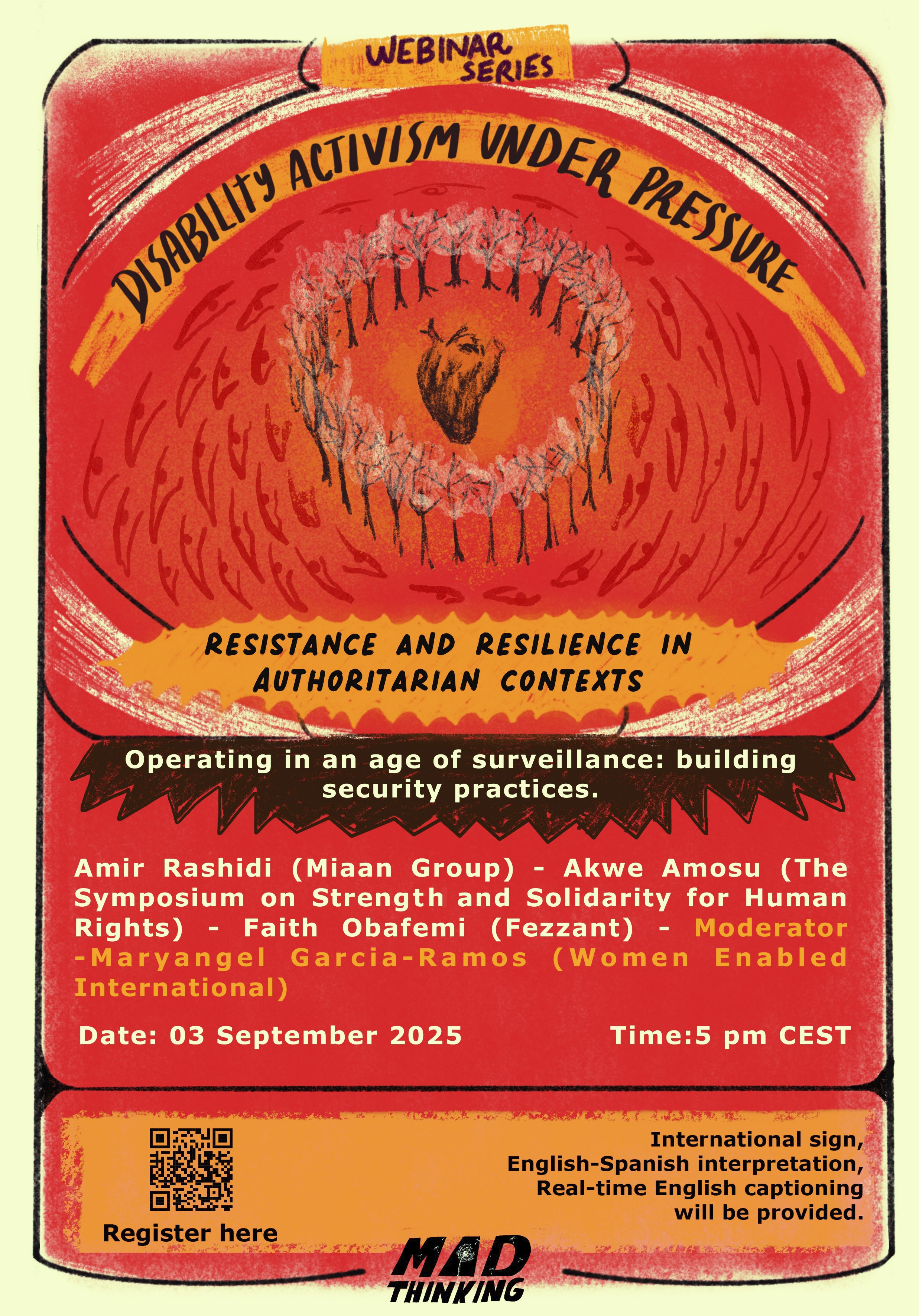
Our next session, Operating in the Age of Surveillance, will take place on 3 September at 5 PM CEST. We hope you will join us to explore how movements can build security practices and resist constant monitoring. If you have not registered yet, you can register now.
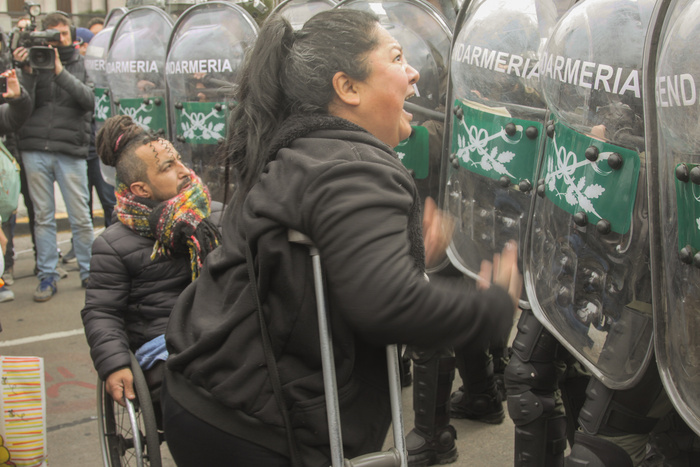
Featured image: Disabled activists confront riot police during a demonstration. Photo: Jorge Larrosa / Página 12.
 Mad Thinking
One response to “La Yapa – Reflections from The Authoritarian Blueprint in Action”
[…] Contexts“. Following on from our first conversation (you can find our reflections on our website), this instalment of La Yapa reflects on the session on Operating in an Age of Surveillance: […]
LikeLike